
The other day, we were at my husband’s choir concert after already surviving my daughter’s birthday party. She’d had an amazing time, but by the evening we were all completely exhausted.

I’d spent most of the concert trying to contain two overexcited children fuelled by excitement and too much sugar. By the end, I was ready to get everyone home. As many parents know, especially those parenting neurodivergent children, transitions can be the hardest part of any outing.
Then I spotted my daughter.
She was on stage, completely absorbed in playing with the confetti left behind from the choir’s finale. She wasn’t worrying about bedtime or tomorrow’s tiredness. She was simply experiencing pure joy in the moment.
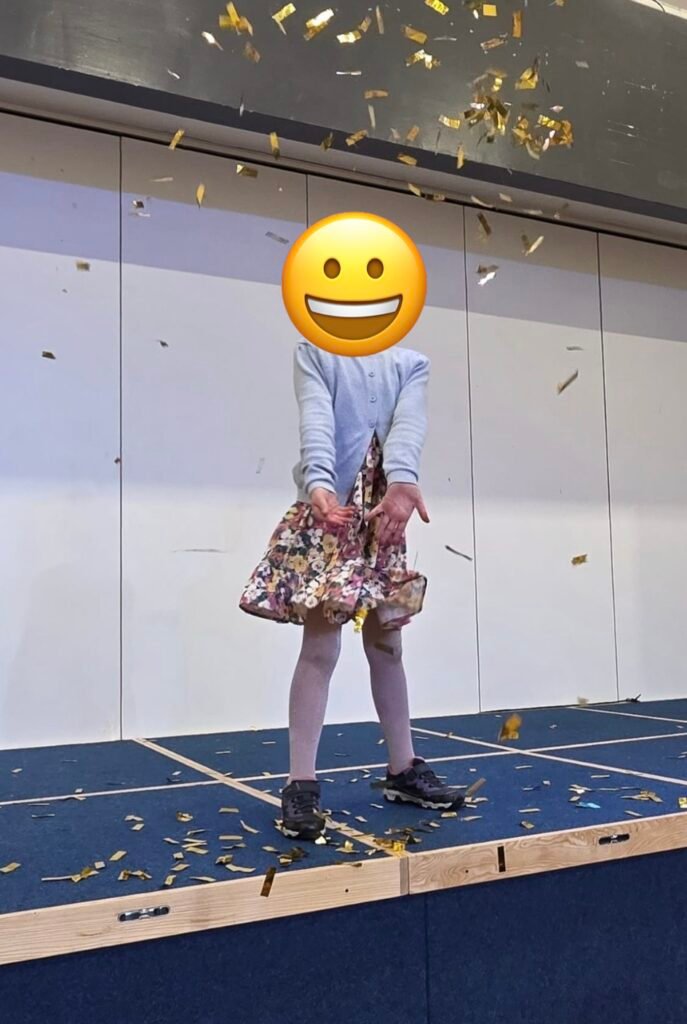
It reminded me of the idea of glimmers—a term coined by Deb Dana to describe the small moments that help us feel joy, safety and connection.
Our brains naturally notice problems more readily than positives. It’s one of the ways they’ve evolved to keep us safe. But the good news is that we can gently train ourselves to notice the good alongside the difficult.
That confetti moment became a glimmer for me. It shifted my mindset just enough to soften my frustration and reminded me that sometimes children have something to teach us about being present.
How to spot glimmers
The more we notice glimmers, the easier they become to find. You might pause each evening to ask yourself, What made me smile today? Keep a note on your phone, take photos of ordinary moments that bring you joy, or spend a minute really noticing your morning coffee, the warmth of the sun, birdsong or a conversation that left you feeling lighter.
When life feels busy and you’re running on empty, glimmers won’t solve everything. But they can remind your nervous system that alongside the stress, there is still joy, beauty and calm to be found. Sometimes, that’s exactly what we need to help us find our way forward.